



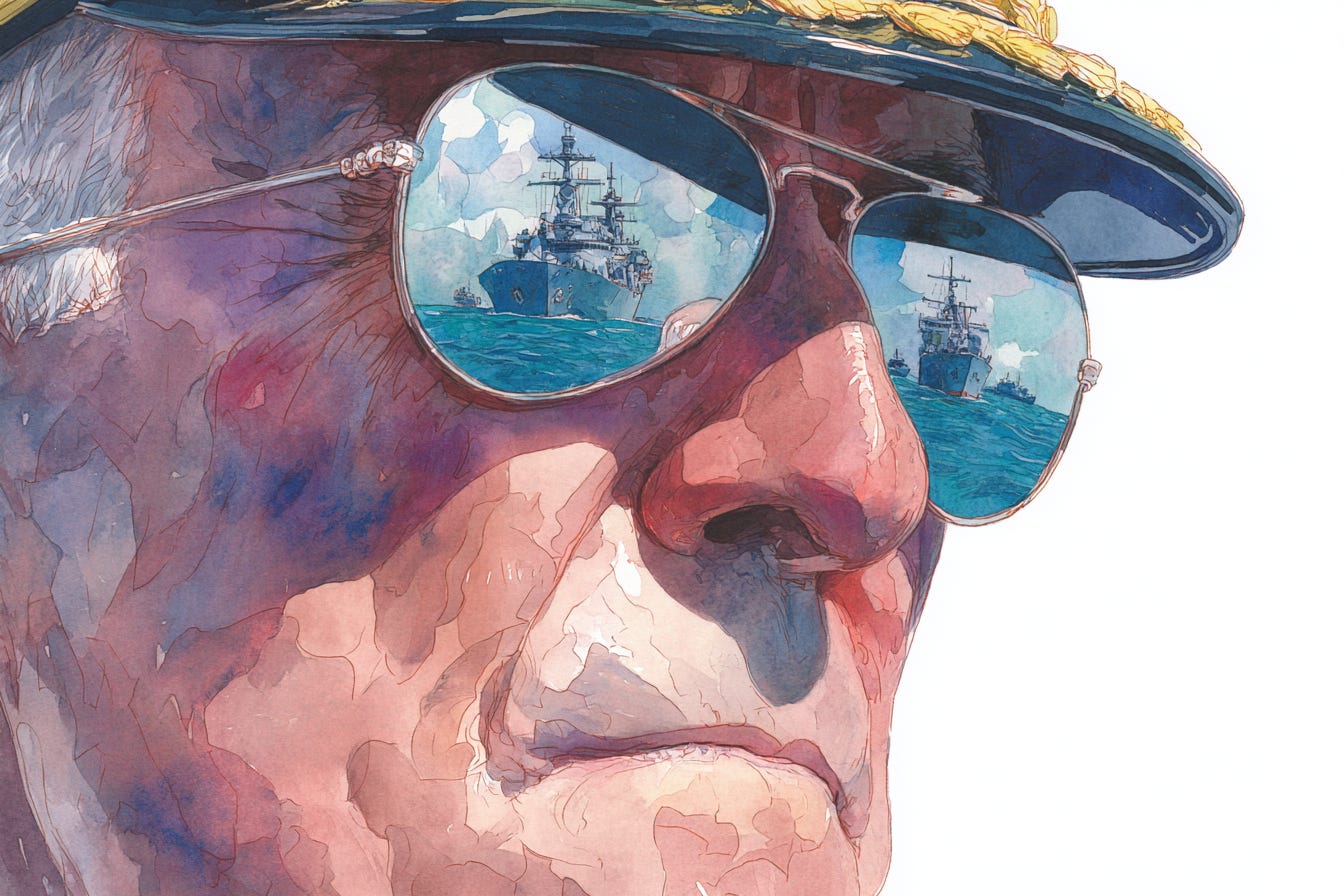
A warm smile surely broke the stern demeanor of President Xi Jinping as his aides informed him that Saudi Arabia and Kuwait cancelled America’s latest military stunt, Project Freedom, a mere 40 hours after it began.
The eagle has been reeled in by the eaglets, the Arab allies said emphatically, for the first time since this war began,
no more لامزيد
Trump’s bold maritime crusade to force the strait open was axed last week, not on behalf of the Iranian response—which was notable and wreaked havoc in the UAE especially—but by some of the USA’s most important regional partners. Reports from Drop Site News and The Guardian indicate Saudi Arabia and Kuwait were completely taken aback by the operation, feared a fierce Iranian retaliation, and pulled the plug by closing their airspace to the hundreds of US aircraft before the conflict spiraled once again.
Whether or not “Project Freedom” posed any prospect of success, the mission ending through regional partners breaking ranks is unprecedented and bodes extremely poorly for cooperation in the future. The message is clear: you can’t count on us, and we can’t count on you.
Despite early reports that Crown Prince Mohammed Bin Salman was privately backing the US regime change war, a recent statement by Saudi Arabia’s former intelligence head—and son of late King Faisal—dispels those notions and indicates that the Kingdom never supported the US-Israeli operation. Rather, according to Al-Faisal, Saudi Arabia perceived Epic Fury as an attempt by Israel to “plunge the region into ruin and destruction” in order to “impose its will on its surroundings as the only remaining actor.”
To drive home their dissension, sources in Saudi Arabia disclosed that the nation is now pursuing a non-aggression pact with Iran and is inviting others in the Gulf Cooperation Council (GCC) to follow suit.
Saudi Arabia and Kuwait may be the first to defiantly break ranks, but the reality is dawning upon the entire GCC. Washington is not the same partner it once was, and Tehran looms larger than ever over Doha, Kuwait City, Manama, and Riyadh.
It now appears that the following divide has taken shape:
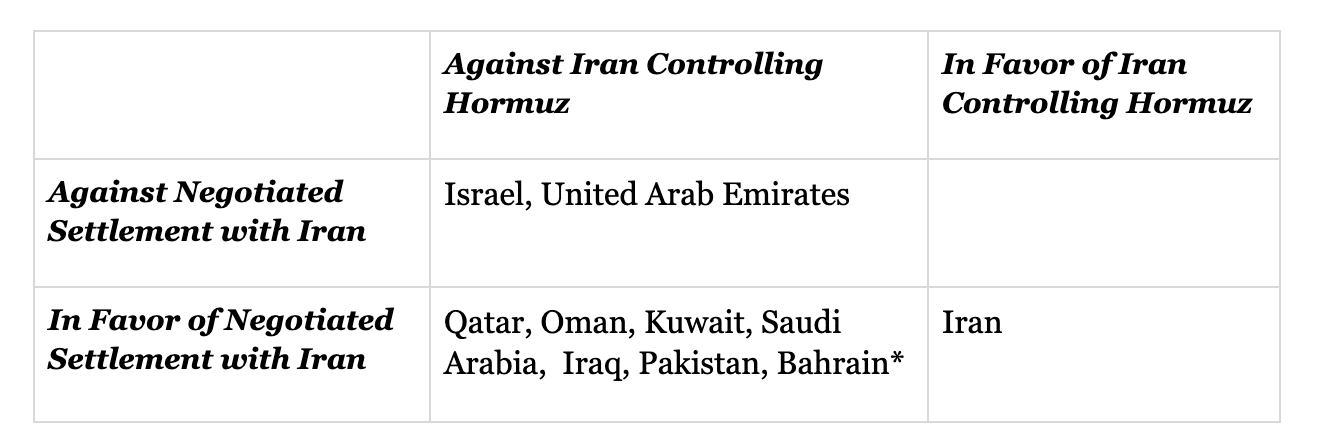
The outlier is the United Arab Emirates, who have insisted on prioritizing Israel as a partner over their Saudi neighbors—although a recent dispute over whether or not Benjamin Netanyahu secretly visited Abu Dhabi or not during the war is straining the off-the-record romance.
UAE drama aside, Saudi Arabia and other Gulf nations are recognizing the Iranian regime’s stability and are pursuing a more diplomatic approach.
Although Saudi Arabia has fared relatively well on the oil revenues front compared to some of their less geographically-fortunate neighbors over the course of the war, it has nevertheless incurred an major drop in oil revenues that may take years to recover from. With oil revenues indefinitely inhibited, and tourism plunging off a cliff, Saudi Arabia’s sovereign wealth fund has begun pulling back from the global economy, as evidenced by their recent abandonment of the controversial LIV Golf League. Saudi Arabia’s mounting challenges are dwarfed however by their neighbors such as Kuwait, who recorded 0 crude oil oil exports in April for the first time since the Gulf War. Bahrain and Qatar find themselves in similar straights.
Even if the strait miraculously opened tomorrow, the economic damage the Gulf has sustained to date is incalculable.
To add to financial concerns, new reports from mainstream outlets including The Washington Post confirm what digital open source analysts had suspected—US military assets across Saudi Arabia, Iraq, Kuwait, Bahrain, and the UAE have been severely damaged. Satellite informed estimates now indicate over 220 US military structures were struck by Iran’s ballistic missile and drone salvos in February, March, and early April. Many of these facilities have reportedly become inoperable and lie dormant as the tense ceasefire drags on.
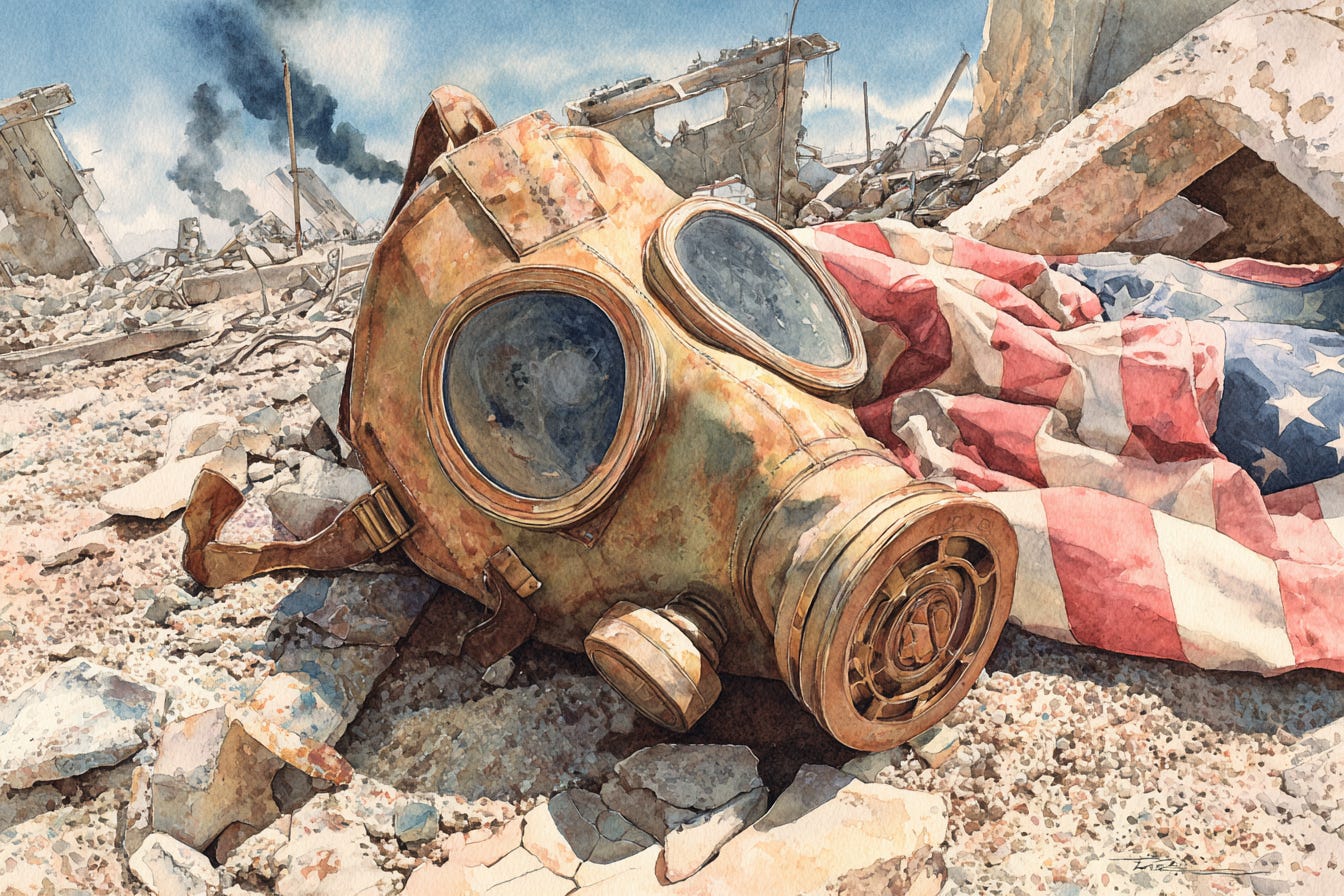
The region now finds itself at an inflection point—finance billions in repairs on US bases for an unpredictable and neglectful ally, or pivot to greater independence and new security partners.
One nearby nation could serve as an inspiration for the Gulf and has successfully experimented in creating a ‘security-hedge’: Dijbouti.
The small, desolate East African nation maintains a rather interesting security arrangement, hosting naval bases from both the USA and China. In 2017, China chose a site in Dijbouti to launch its first foreign military base, placing it only a few miles from the USA’s massive Camp Lemonnier. Publicly, this decision was motivated by China’s desire to maintain freedom of navigation and to enforce the UN’s Charter combatting piracy. However, the site clearly provides other advantages, allowing China to project its posture in a volatile region dotted with American and European military facilities and to consolidate control over a new economic corridor into Africa.
The USA did not take kindly to Dijbouti’s welcoming of the People’s Liberation Army and condemned the move on several occasions. Dijbouti’s autocrat Ismaïl Omar Guelleh waved the USA’s concerns aside, more intent on securing China’s $14 billion in infrastructure investments than protecting the feelings of his American security partner. Dijbouti has taken it one step further though, and has willingly supplied Iranian vessels bound for Houthi-controlled Yemen in flagrant disregard of American interests.
Dijbouti was not reckless however, but clairvoyant. By catering to China, Iran, and the USA simultaneously, it has ensured further Chinese investment, has deterred Houthi attacks, and positions itself comfortably under the security USA’s security umbrella.
For Dijbouti and its neighbors to the East, radical neutrality may be the most compelling way forward.
Over the next few years, Gulf nations will massively increase spending on foreign weapons, likely on American arms but diversifying into Chinese weapons increasingly—such purchases are already underway as Qatar is reportedly planning to acquire new Chinese air defense systems. As 2030 approaches, American military installations will likely be downsized or phased out, and Chinese coastal infrastructure deals will begin to take shape. At first, these will be for logistics, or basic naval support in the Red Sea and in the Persian Gulf. Over time, these facilities will slowly grow into formal military facilities capable of true power projection. This is the Gulf’s real hedge against both Iranian and Israeli aggression. The Hormuz crisis has also given China its “in”, as it can justify military expansion in the region under the pretense of securing maritime navigation and security—something the USA was not able to do.
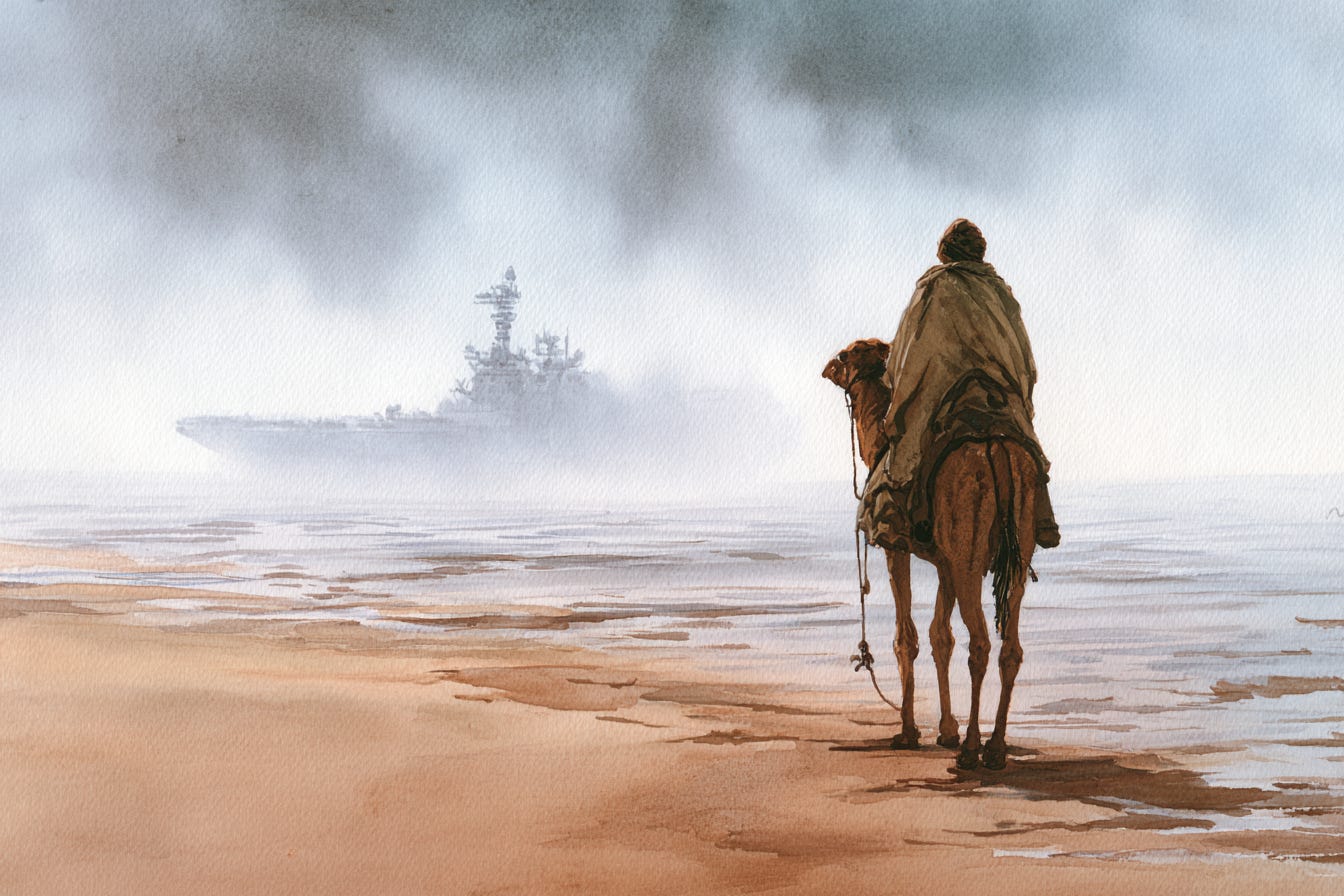
Epic Fury has not only empowered Iran, through reestablishing its deterrence and providing it indefinite control over Hormuz, but has also set in motion a complete restructuring of the Middle East’s security framework. When the smoke clears, America will look out across the region and see Chinese masts emerging through the haze.